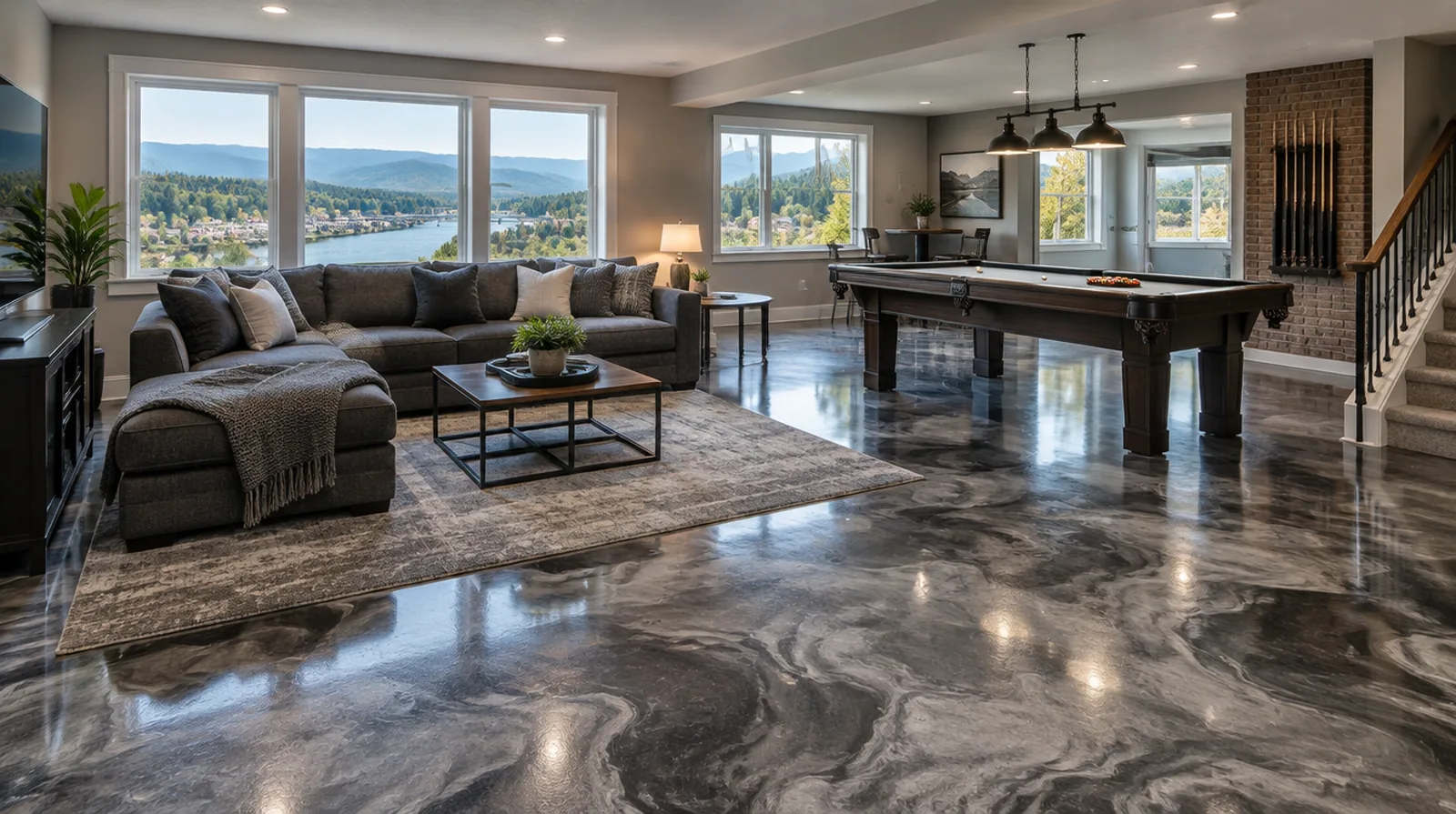
What makes metallic floors different
A metallic floor uses a clear epoxy mixed with fine metallic or pearlescent pigment. As the material flows and levels, the pigment particles shift and settle, creating swirls, veins and soft clouds. The light catches those layers differently from every angle. No two floors are alike, and the installer's technique guides the pattern from subtle marble to bold, lava-like movement.
Where it fits best
Metallic floors suit interior spaces where people see and enjoy the floor: finished basements, home theaters, game rooms, bars, salons, offices, showrooms and event spaces. We often install them in basements of hillside homes where the lower level opens to the backyard and the floor becomes a centerpiece. They are less common in working garages because tires, grit and dropped tools can scratch the glossy surface, though some car collectors choose them for showcase garages.
Preparation matters even more
Because a metallic floor is glossy and reflective, every defect in the slab shows. We grind more carefully, fill every crack and pit, and often skim coat the whole floor to create a smooth base. Basements are checked for moisture with extra attention, since below-grade slabs here often carry vapor from damp soil. A moisture mitigation primer is used whenever readings call for it. Skipping that step can lead to blisters that ruin a decorative floor.
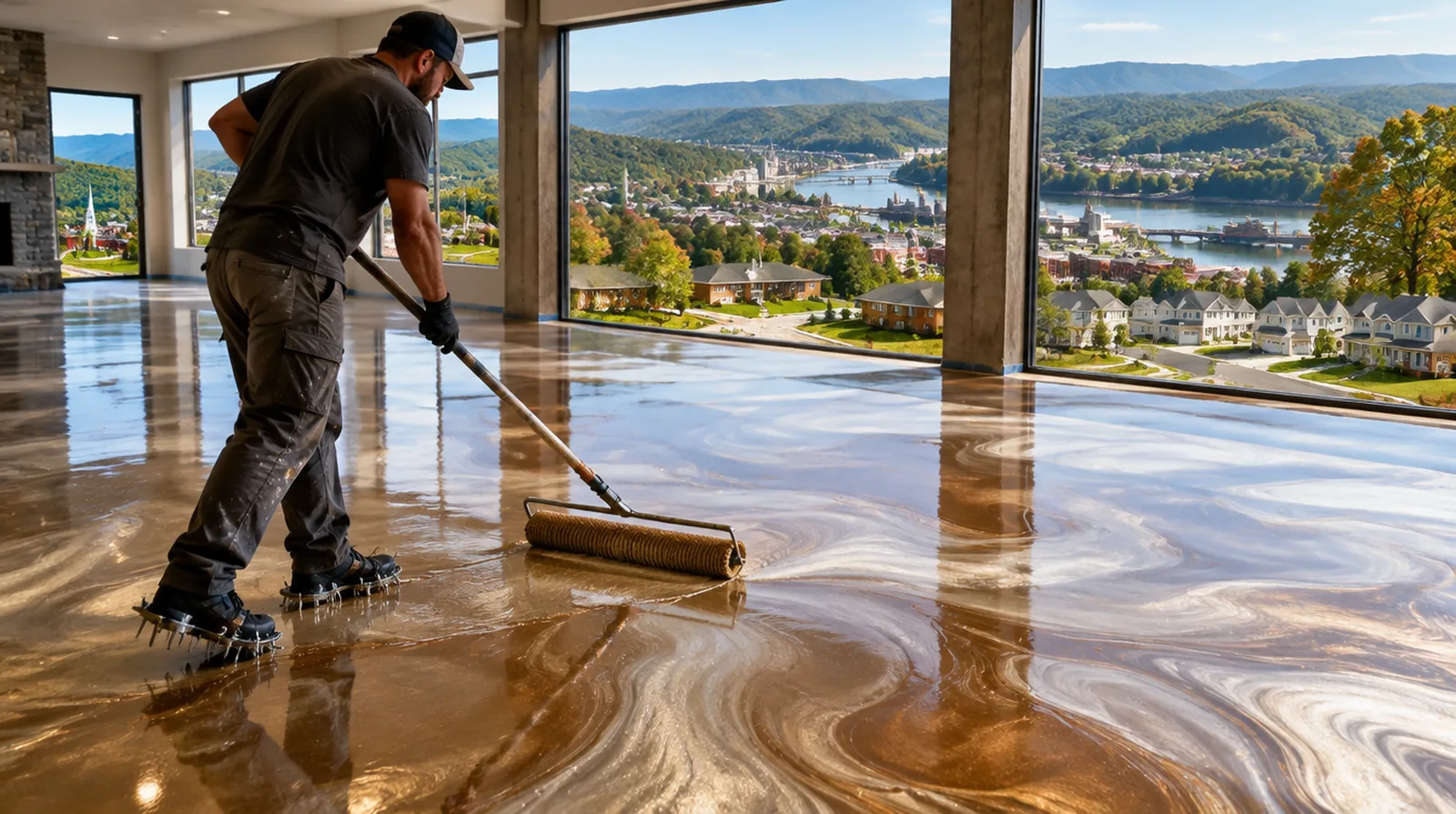
The installation
After priming and a base coat that sets the background color, we mix the metallic layer and pour it in sections. Installers move material with rollers, trowels and brushes, and sometimes use sprayed solvent or air to create cells and veining. Working fast and in a planned order keeps seams invisible. Once the metallic coat cures, we apply a clear topcoat, usually a polyurethane or polyaspartic, which adds scratch resistance and UV stability. A satin or gloss sheen can be chosen.
Choosing a look
Popular combinations include silver over charcoal for a modern look, bronze and copper for warmth, pearl white for a bright marble effect, and deep blues or greens for a water-like effect. We can mix two or three colors for more depth. Before the job, we show photos of past floors and sample boards and talk about the furniture, walls and lighting in your room so the floor ties into the space.
Durability and care
Metallic floors are hard and seamless and resist water and most household spills. Like any glossy floor, they can scratch from grit dragged underfoot, so a mat at entrances and felt pads under furniture help. Clean with a dust mop and a neutral cleaner. If the topcoat dulls in a high-traffic path after years, it can be buffed and recoated without disturbing the metallic layer.
Commercial metallic floors
Boutiques, salons, tasting rooms and car dealers use metallic floors to make a strong first impression. For commercial jobs we choose topcoats rated for heavier traffic and plan installation during closed hours. A small showroom can often be finished over a weekend.
Is metallic right for you?
If you want a floor that feels custom and draws attention, metallic is hard to beat. If you mainly want a hardworking floor that hides dirt, a flake floor may be the better pick. We will give you an honest recommendation.
Questions
Will it look like the photos?
It will have the same character, but each pour is unique. We control color and movement closely.
Is it slippery?
A fine texture additive can be added to the topcoat for better grip.
How long does it take?
Most basements take two to four days, including cure time between coats.
Plan your floor
Contact us to see samples and get a written quote for a metallic floor.
to talk about a metallic floor.
Call (423) 830-2912 for a free estimate.