Why driveways wear out
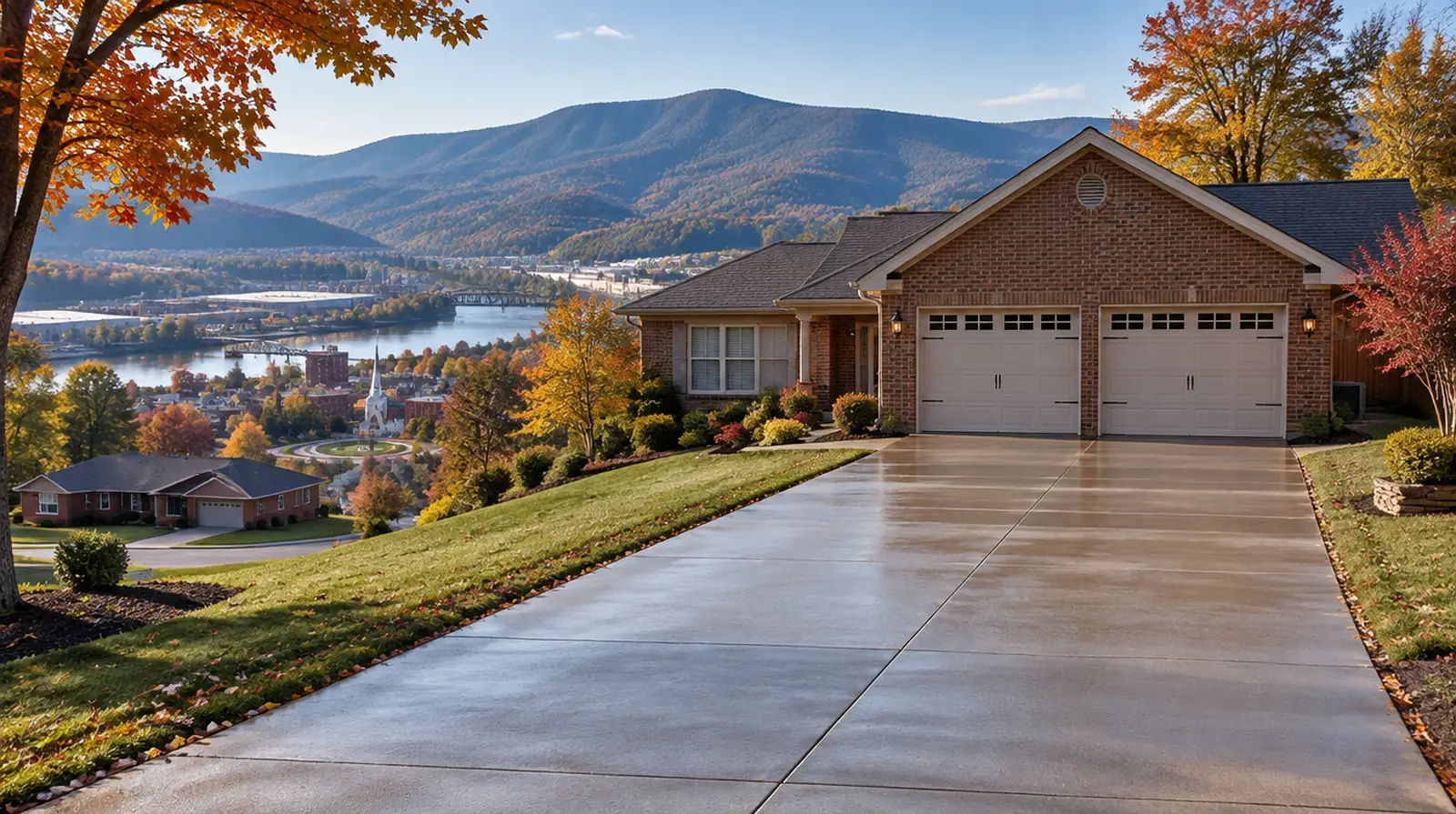
Many driveways here climb hills, so water runs down them during every storm and freezes in cracks during cold snaps. Ice expands and pushes cracks wider. Road salt tracked from the street breaks down the surface paste and causes scaling and pitting. Tree roots lift sections, oil drips leave dark spots and red clay washes across the surface after storms. Over time, a driveway can look tired even if it is structurally fine.
Our process
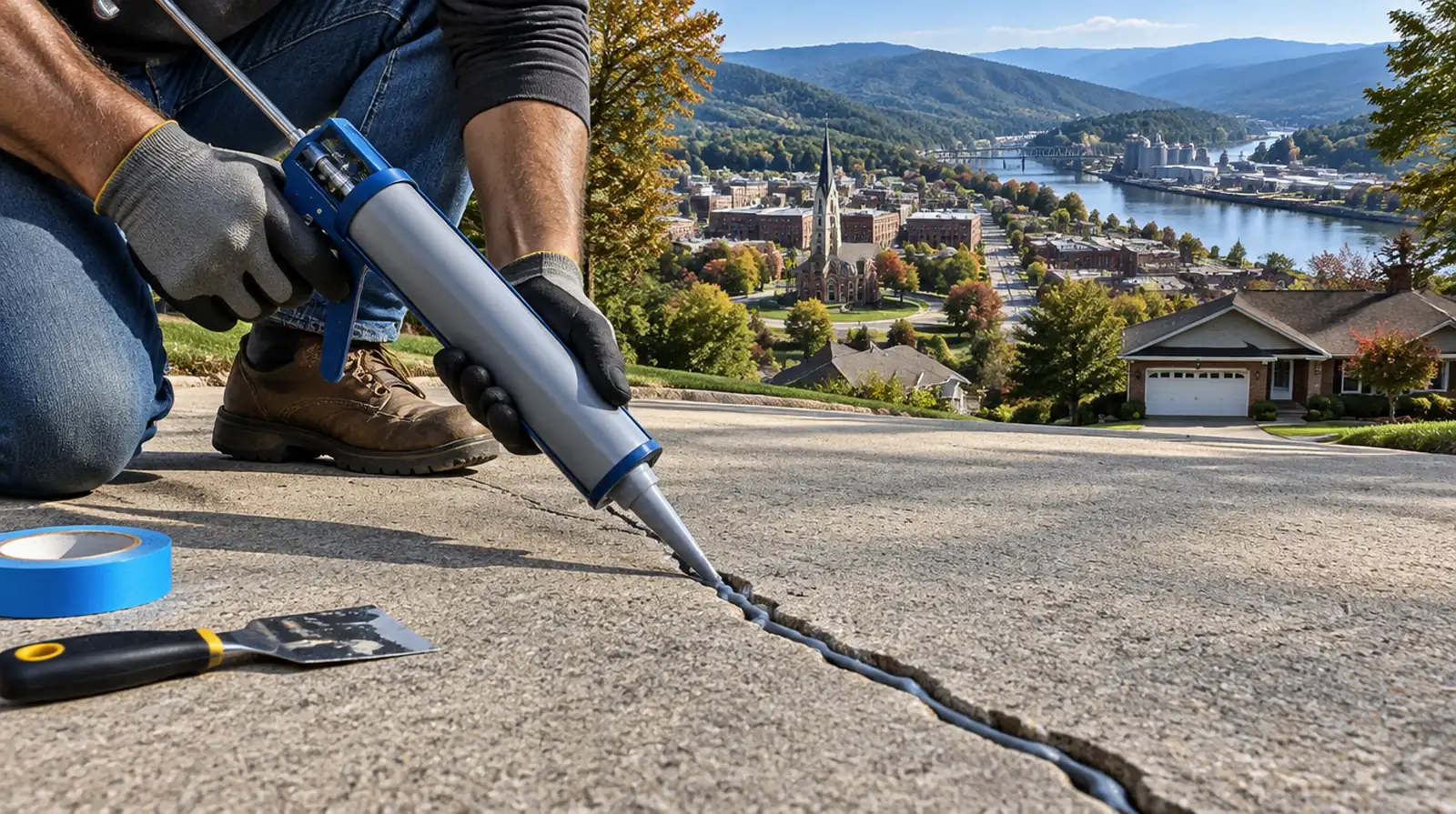
We start with a thorough cleaning using hot water pressure washing and stain treatments. Oil and rust stains get specialized cleaners. Then we repair cracks, fill pits, and fix spalled areas with polymer-modified repair mortar. Joints are cleaned and filled with flexible sealant to keep water out of the base. Finally we apply a sealer or coating chosen for your driveway's condition and how much shine you want.
Sealer options
For most driveways, we recommend a penetrating silane or siloxane sealer. It soaks in, blocks water and salt, and leaves the concrete looking natural with full traction. For decorative or stamped driveways, a film-forming sealer brings out color and adds a light sheen, with grit added for traction on slopes.
Resurfacing
If the surface is badly scaled but the slab underneath is sound, resurfacing can give it a fresh face. We apply a thin polymer-modified overlay that bonds to the old concrete, then broom finish or texture it for grip. Resurfacing costs far less than tearing out and repouring, and it can last many years with proper sealing. If sections are heaved, sunken or broken through, we will tell you whether resurfacing makes sense or whether replacement is the better route.
Why we do not use epoxy outdoors
Standard epoxy does not belong on an exposed driveway. It yellows in sunlight, traps moisture underneath and becomes slippery when wet. Our exterior systems use breathable penetrating sealers or UV-stable coatings with texture. We will not sell you a glossy driveway that turns into an ice rink in winter.
Steep driveways
Hilly lots are common here, and steep driveways need extra attention to traction. We avoid smooth film sealers on steep grades unless grit is added. Penetrating sealers keep the broom texture intact so tires and shoes keep their grip in wet or icy weather.
Winter tips
Use plain sand for traction or calcium magnesium acetate instead of rock salt on new or resurfaced concrete. Shovel promptly so snow does not melt and refreeze repeatedly. Avoid metal shovel blades that gouge sealed surfaces, and rinse the driveway in spring to wash away salt residue.
Maintenance schedule
Clean and inspect every year, refill joints when sealant shrinks, and reseal every few years. Small cracks are easier and cheaper to fix early before water and ice widen them.
Questions
Can you match the color of patched areas?
Patches may differ slightly at first but blend in as they weather. Resurfacing gives a uniform look.
How long before I can drive on it?
Sealing usually allows driving the next day; resurfacing needs several days.
Do you coat asphalt?
No, we specialize in concrete.
Restore your driveway
Request a free estimate and we will inspect your driveway and recommend the right fix.
Aprons and garage thresholds
The strip where the driveway meets the garage takes the worst of winter. Slush melts off cars, runs to the threshold and refreezes overnight. That spot often scales first. We give aprons extra attention, repairing damaged edges and sealing them carefully so salt water does not keep attacking the same few feet of concrete year after year.
to get a driveway estimate.
Call (423) 830-2912 for a free estimate.