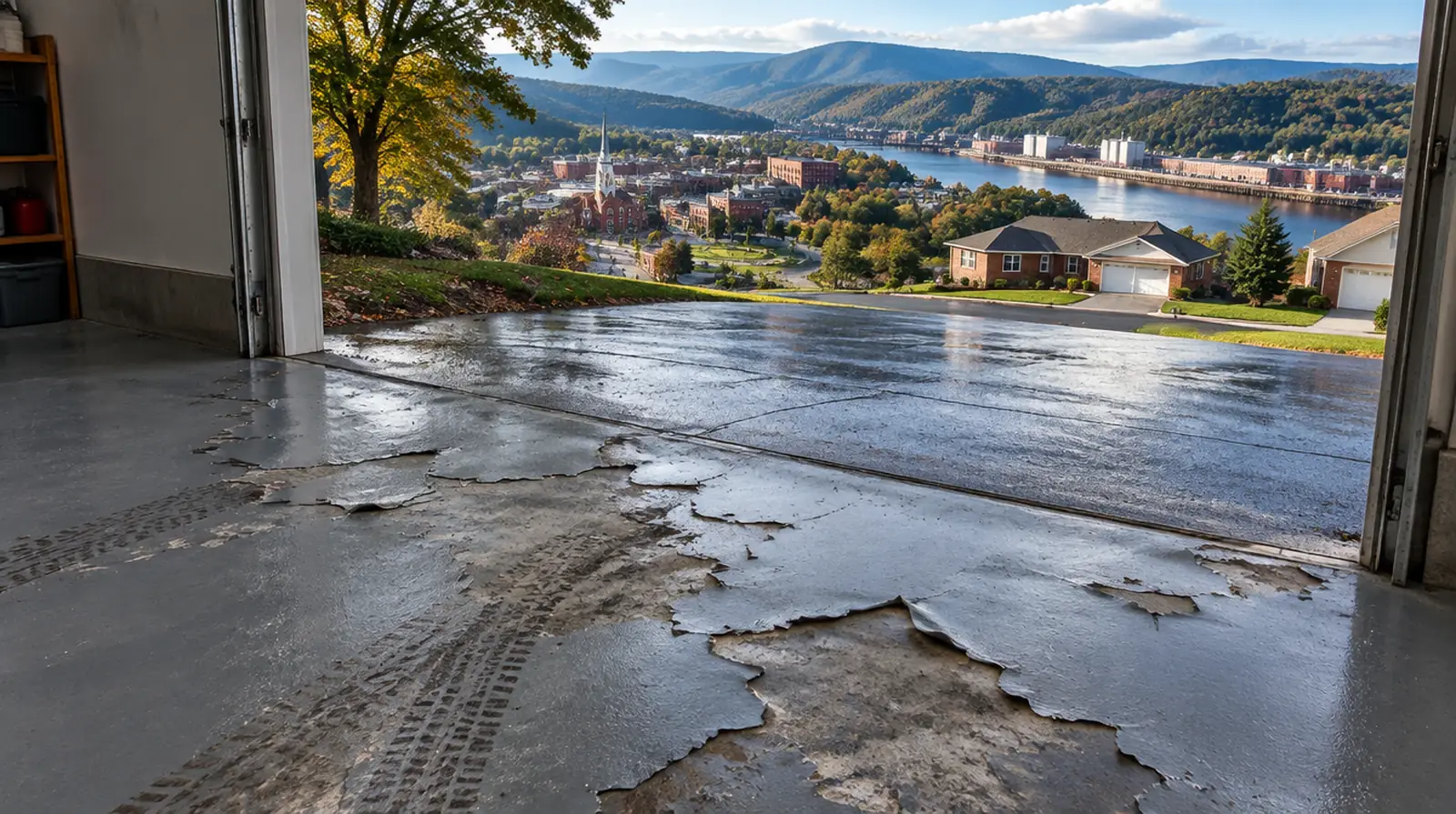
Why coatings fail
When a coating peels or bubbles, the cause almost always traces back to the slab or the preparation. The most common reasons we see are coatings rolled over smooth, unground concrete; coatings applied over sealers or curing compounds; moisture pushing up from below; and thin, low-solids kit products that cannot handle hot tires. Water-based garage paint lifts in sheets when warm tires sit on it in summer. Moisture-related failures show up as blisters, sometimes filled with liquid, often in basements or on slabs next to hillsides.
Diagnosing the floor
We start by inspecting the coating and checking its bond. We scrape at the edges of failures, look for patterns, test moisture and talk with you about how the floor was installed and when problems started. If the coating is only worn in traffic lanes but still bonded, a recoat may be enough. If it is loose in many areas, partial repairs will keep failing and full removal is the better value.
Spot repairs
Small damaged areas, such as a chip from a dropped tool or a gouge from a jack, can be repaired. We cut out the damage, grind the edges, fill with epoxy, and blend the area with matching color or flake. Spot repairs are rarely invisible on older floors because the original coating has aged, but they stop the damage from spreading and restore protection.
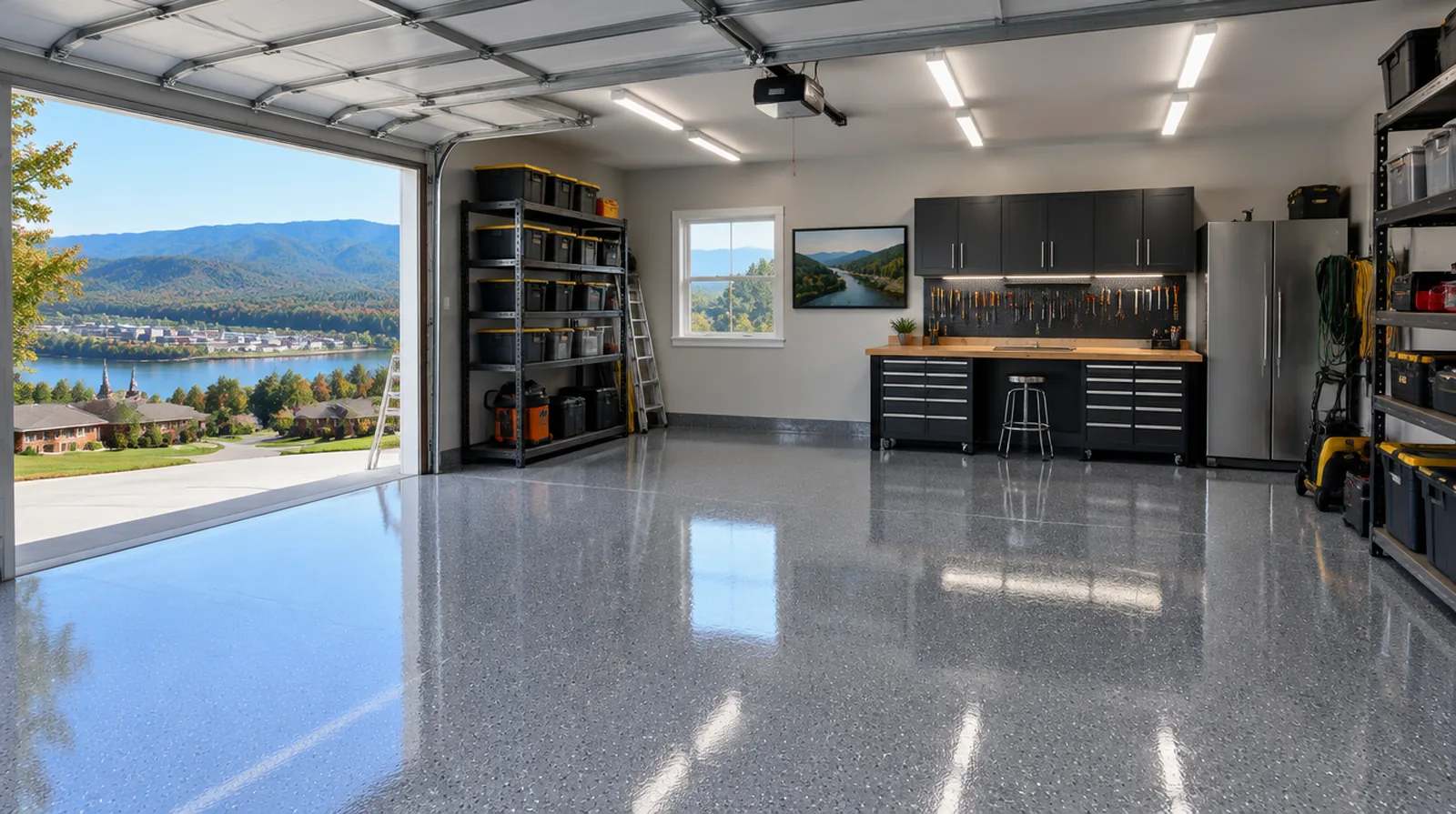
Recoating worn floors
A floor that is still bonded but dull, scratched or stained can be refreshed. We clean and degrease, sand or lightly grind the existing topcoat to create a profile, repair any chips, and apply a new topcoat. This restores gloss and protection for a fraction of the cost of a new floor. Upgrading from an epoxy topcoat to polyaspartic often adds UV and scratch resistance.
Full removal
When a coating is failing broadly, we grind it all off. Our grinders with aggressive tooling remove paint, epoxy and old sealers down to clean concrete. Any moisture problems are addressed with a mitigation primer. Then we install a new system properly. It is more work than a recoat, but it is the only fix for a floor that was never bonded in the first place.
Concrete damage under coatings
Sometimes peeling coatings hide concrete problems: spalled areas from salt, cracks that have widened, or settled sections. We repair these before recoating. Spalling near garage doors is common here because of winter road brine. Filling and grinding those areas makes the new floor flat and strong.
Other floors we repair
We repair epoxy and urethane floors in shops, restaurants and plants as well as garages. Commercial repairs often focus on traffic aisles, joints and areas near equipment. We can phase repairs around operations and match textures and colors as closely as possible.
Avoiding repeat failures
The best way to avoid another failure is to treat the cause, not just the symptom. If moisture is the problem, a new coating without mitigation will fail again. If hot tire pickup was the issue, a stronger system with better preparation is needed. We explain the cause we find and how the new system addresses it.
Questions
Can you match my existing color?
We can get close, especially with flake blends, though aged floors may differ slightly.
Is repair cheaper than replacement?
Usually, if the coating is still bonded. If not, replacement is the better value.
Why did my DIY coating peel?
Most often because the slab was not ground and the product was too thin for vehicle traffic.
Get an honest assessment
Send photos or schedule a visit, and we will tell you whether repair, recoat or replacement fits your floor.
to get your floor assessed.
Call (423) 830-2912 for a free estimate.